
Author
In Europe, poverty and social exclusion remain part of daily life for millions of people. On this International Day for the Eradication of Poverty, we share the stories of “people beyond poverty,” stories that show what can become possible when people have the right support to overcome difficult circumstances and shape a different future.
When you think of poverty, what do you picture?
For many of us, it is a familiar image: hardship, deprivation, lack of money. Yet, in Europe, poverty and social exclusion are part of daily life for millions of people, and most of them would not fit that picture. Poverty is much wider than what we tend to think, and often harder to see.
It is about more than a lack of money: it can affect health, family life, housing and the ability to live in dignity. It can mean having a job and still not making enough to live by. It can mean skipping meals, not being able to afford your home, or growing up without the same opportunities as other children. It can mean losing touch with the people closest to you. And it can arrive unexpectedly, after a separation, illness, a lost job, illness or a bad . It may be closer than we think.
On this International Day for the Eradication of Poverty, we are sharing the stories of people beyond poverty. Stories that reveal the many faces and dimensions of poverty, that challenge the assumptions we make about who experiences it, reminding us that poverty does not define a person. And they show how the right support can help create the conditions for people to regain stability, participate in their communities and shape their own futures.
Here are two of those stories.
Agnieszka: “My children give me enormous strength”
Agnieszka’s story starts in winter, in Poland. She was living in a place she was about to be evicted from, with no money and nowhere to go.
“I was in a dire situation and really didn’t know what to do,” she says. A friend who had experienced homelessness gave her a Caritas business card. She called, and help came quickly. Step by step, she was guided on where to go and what to do: first to a crisis intervention centre, then to a home for single mothers.
Her path to that point had been long and painful. She talks openly about a difficult adolescence, when she began smoking and drinking and struggled to find her way. At 23, she had a daughter with her partner, but the young family struggled to make ends meet, moving from one rented flat to another with little support. When they faced the threat of homelessness, her foster parents took them in. But tensions eventually led her parents to ask them to leave and prevent her from seeing her daughter. After this, she says she then lost herself in drugs and alcohol. It was only when her health got so bad that she had to choose between quitting and dying that she said “enough”.
Things are slowly changing. Agnieszka is now part of the “We can do it!” programme run by Caritas Poland. She lives with her younger daughter, Natalka, in the home for single mothers, and she has applied for an apartment. She is rebuilding her bond with her older daughter, and the two sisters are growing close too.
“I know it will take a lot of time to fix everything,” she says. “Patiently, I will put everything in life back together.” What matters most to her is simple: “to provide my children with decent, safe conditions. So that we can be together.”

Mélanie: more than just food
Mélanie is 36, a mother of two living on France’s minimum income benefit (RSA). In 2022, she came to Secours Catholique – Caritas France to collect food parcels. She was struggling to provide for her family.
What she found there was more than food. She met a group of caring, supportive women, and with them, little by little, she regained her confidence.
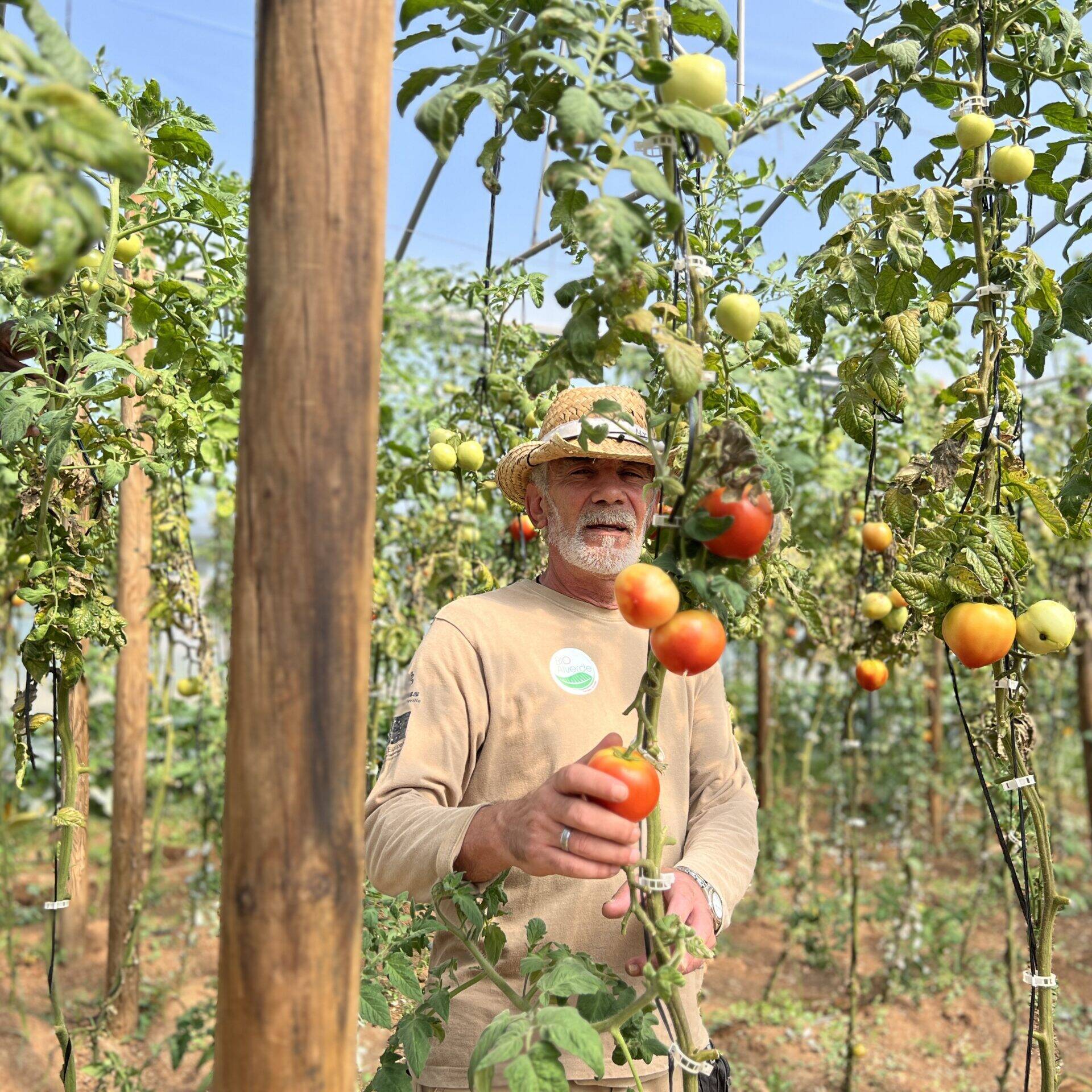
Mélanie went on to help set up La Salamandre, a community grocery shop in Beaufort-Orbagna, in the Jura region. The shop sells mostly organic fruit, vegetables, meat and cheese from local farmers and producers. Its prices adapt to people’s circumstances: those who can afford it pay the fair price, while people in more difficult situations get discounts of up to 70%. It has also become an important meeting place in a small town.
Today, Mélanie is one of the shop’s most committed volunteers. She looks after the relationship with its suppliers and often visits them with her daughter. And she now feels strong enough to start training for a career in social work.

Poverty is not a fixed picture
Mélanie and Agnieszka have very different stories. What they share is a turning point: a moment when someone listened, offered a hand and stayed alongside them while they found their own way forward.
Their stories also remind us that moving beyond poverty is not only about individual resilience. It depends on whether people can access the support, services and opportunities they need to rebuild their lives and on whether public policies create the conditions for this to happen.
This is why the EU’s efforts to tackle poverty and social exclusion matter. The EU’s anti-poverty strategy represents an encouraging first step, but its ambitions must be matched by concrete measures, strong political commitment and adequate funding, both at EU and national levels. The next EU budget will be a crucial test of whether the fight against poverty is truly treated as a priority.
Ultimately, the measure of any strategy is what changes in people’s lives. The stories of Agnieszka and Mélanie show that poverty is not a fixed picture, and neither is a person’s future. With the right support, people can regain stability, reconnect with others and shape a different future.
Their portraits and stories are part of Caritas Europa’s photo exhibition “People beyond poverty”, coming to Brussels in December. For a preview, watch out for our trailer here.
Photos:
© Caritas Poland
© Vincent Boisot, Secours Catholique – Caritas France