
Author
While global attention remains focused on several high-profile emergencies, Burkina Faso continues to face a protracted humanitarian crisis that remains severely underfunded despite growing humanitarian needs.
Millions of people are living with the combined impacts of displacement, food insecurity, disrupted livelihoods and limited access to essential services, with some 4.5 million people requiring humanitarian assistance in 2026.
The crisis is driven by a combination of prolonged insecurity, repeated population displacement, climate-related pressures and declining agricultural production in areas facing significant security challenges. These interconnected factors have forced many families to abandon their homes and livelihoods, placing increasing pressure on host communities and overstretching already limited basic services. Humanitarian access remains difficult in some areas, particularly during the rainy season when roads become impassable, further increasing the cost and complexity of delivering aid.
Food insecurity is expected to worsen during the lean season and throughout 2026 in some areas facing major security challenges. Household food stocks are being depleted, food prices remain high in these localities, agricultural production is disrupted and access to agricultural inputs remains limited. At the same time, funding shortfalls continue to constrain the humanitarian response. By July 2026, the Humanitarian Response Plan had received only 16% of the funding required.
Caritas’ response
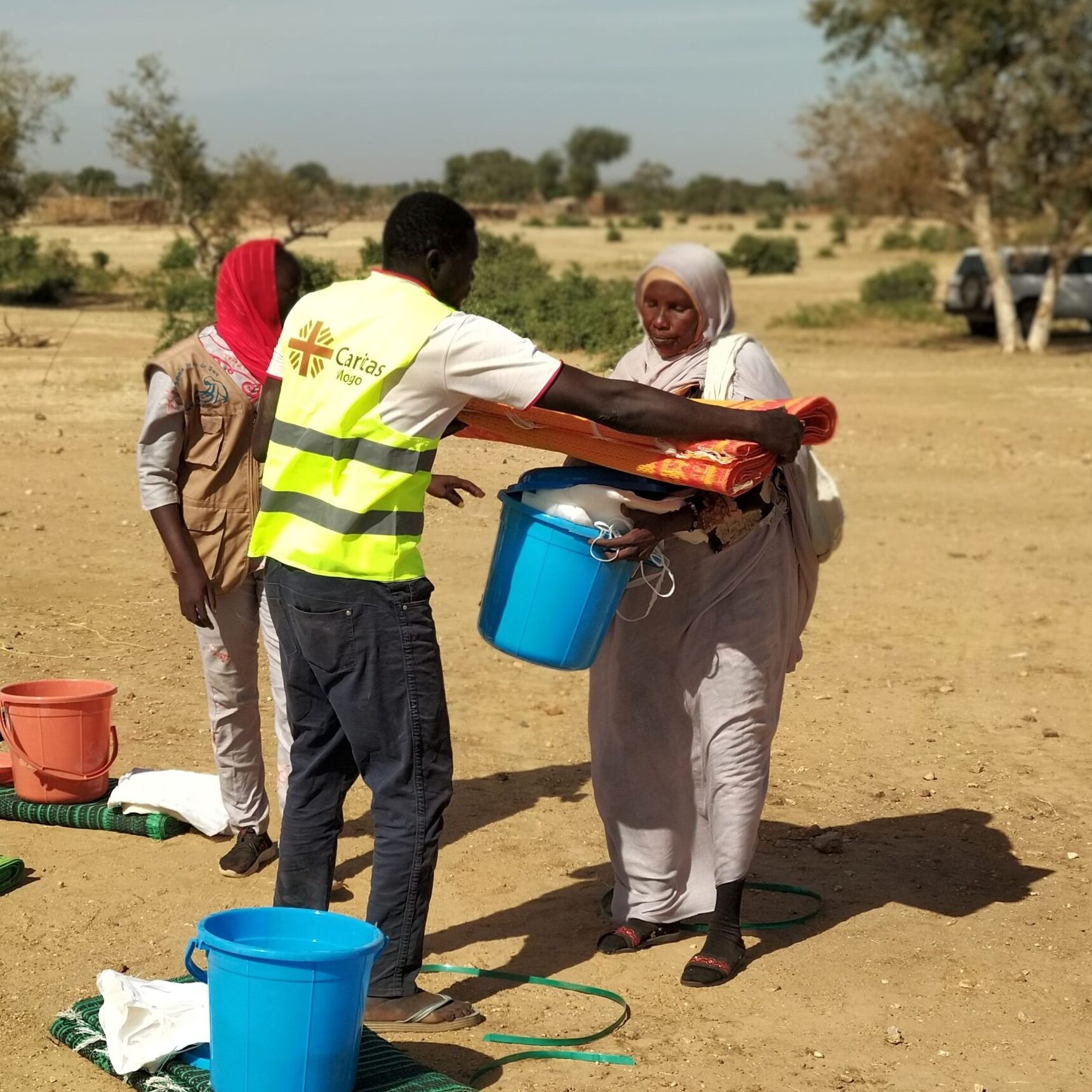
Despite these challenges, OCADES (Caritas Burkina Faso), with the trust and support of its partners, continues to provide life-saving assistance while investing in long-term resilience. Through its strong local presence and extensive community networks, OCADES supports internally displaced people and host communities in vulnerable situations across several regions through food assistance, nutrition support, water, sanitation and hygiene (WASH) services, livelihood strengthening, psychosocial support and disaster resilience programmes.
In Yagha Province, in partnership with the UN World Food Programme , OCADES provided emergency food and nutrition assistance to more than 23,000 internally displaced people and other vulnerable individuals during April and May 2026, while also conducting nutrition awareness, hygiene promotion and protection activities.
Beyond emergency assistance, OCADES is helping communities strengthen their resilience to future shocks. In Dori, land restoration activities using locally adapted techniques such as zaï pits and half-moons are helping rehabilitate degraded land and improve agricultural productivity. The recently launched PROSPER project will further strengthen food security, livelihoods, WASH services and the economic agency of women, girls and persons with disabilities in Dori and Boulsa. Additional programmes promote psychosocial support for displaced people and sustainable market gardening to strengthen household incomes and food security.
Local organisations, such as OCADES, continue to reach the communities in the most vulnerable situations, but sustained international support remains essential to meet humanitarian needs while strengthening resilience for the future.
Our call to the EU
In the face of such widespread suffering, and with local organisations unable to meet the full scale of the affected populations’ needs, Caritas is urging the EU to fulfil its responsibilities as a global player by:
- Maintain predictable and flexible humanitarian funding for Burkina Faso and other neglected crises, enabling local humanitarian organisations to respond where needs are greatest;
- Strengthen support for locally led humanitarian action by investing in local civil society partners with long-standing access to affected communities;
- Increase investment in resilience-building programmes that integrate food security, livelihoods, nutrition, WASH and climate change adaptation alongside emergency assistance;
- Continue supporting humanitarian access and protection efforts to ensure that people in vulnerable situations can receive assistance safely and with dignity;
- Keep neglected crises such as Burkina Faso high on the international agenda to prevent funding shortfalls from further exacerbating humanitarian needs.
Sustained international solidarity is essential to ensure that communities in Burkina Faso are not left to face this crisis alone.
Featured photo by OCADES