
Author
Chad is experiencing an ongoing and under-recognised humanitarian crisis. It hosts more than 1.5 million refugees from neighbouring countries, along with hundreds of thousands of internally displaced people and returnees. This is due to several interlinking reasons.
The conflict in Sudan continues to reshape the humanitarian landscape in eastern Chad, and most refugees in Chad are Sudanese. One in 13 people in Chad is a refugee; in the east, every third person is a refugee. Women and children are particularly affected, representing more than half of those requiring humanitarian assistance and facing particular vulnerabilities, especially when on the move. Climate change is also driving the crisis, with floods destroying homes, crops and livestock, resulting in severe food insecurity.
In 2026, due to the humanitarian reset and hyper-prioritisation, there is a strategic focus on areas with the most critical needs. This has led to millions of previously included people being excluded from the UN’s coordinated humanitarian response. The result is catastrophic for those in need. In 2025, only 1.3 million people were reached (23% of the original target). 2026 is shaping up to be even more dire, with the target population reduced to 2.9 million people, down from 5.5 million in 2025. This is not because there are less people in need of assistance, but because funding cuts are forcing humanitarian organisations and the UN to narrow the categories of people that receive assistance.
The pressure is particularly acute in eastern Chad: 55% of recent Sudanese refugees are hosted in Ouaddaï, 25% in Wadi Fira, 11% in Sila and 9% in Ennedi Est. Chad’s humanitarian crisis remains largely overlooked internationally because it competes for attention and funding with several other major global emergencies and receives limited international media coverage. While Chad is not the site of a major conflict, it nevertheless bears the brunt of spillover from conflicts and instability across the region.
Caritas Chad reports that the crisis is having an outsized impact on children and youth in Chad. Children who witness the violent death of their parents or relatives may suffer deep psychological wounds that are not always visible and therefore receive insufficient attention and support. The scale and long-term consequences of the trauma experienced by children are often underestimated. There are many orphaned children in Chad who are left without adequate family, social, psychological and material support. Caritas Chad is trying their best to address the needs of this particularly vulnerable group with their limited resources.
Beyond the numbers, the voices of refugees, women, children, host communities, faith-based organisations and local humanitarian organisations are still not sufficiently visible in international discussions. Local organisations such as Caritas Chad and diocesan Caritas organisations are close to affected communities and can bring their experiences, priorities and local solutions into humanitarian decision-making. Greater international attention should therefore go hand in hand with stronger recognition and participation of local actors and affected communities.
The EU has an important role to play in Chad, both as a humanitarian and development donor and by contributing to peacebuilding in the region. The EU should support local organisations in Chad, who are able to reach those in need and provide contextually relevant support to groups that are most vulnerable, such as orphans, refugees and persons with disabilities. This assistance should include access to education, healthcare, adequate food, clothing and protection.
In the longer term, EU support should reinforce the Humanitarian–Development–Peace Nexus by investing in livelihoods, food security, climate resilience, basic services, social cohesion and conflict prevention, particularly in communities affected by displacement and farmer–herder tensions.
The EU also has an important role to play in helping to broker peace in Sudan, a conflict that has spilled over into Chad with an intense human cost. It should amplify and support civilian‑led pathways to peace and justice, with women and youth at the centre and trusted faith leaders playing a constructive role. The EU should also commit to unified and accountable international diplomacy to end attacks on civilians and civilian infrastructure, and to ensure safe, rapid and unhindered humanitarian access across Sudan.
People in Chad deserve sustained international attention and support. For the EU and other donors, this means ensuring that refugees, displaced people and host communities can meet their immediate needs and rebuild their lives. Supporting local organisations such as Caritas Chad, and listening to the communities they serve, is essential to a response that protects dignity and creates opportunities for a more secure future.
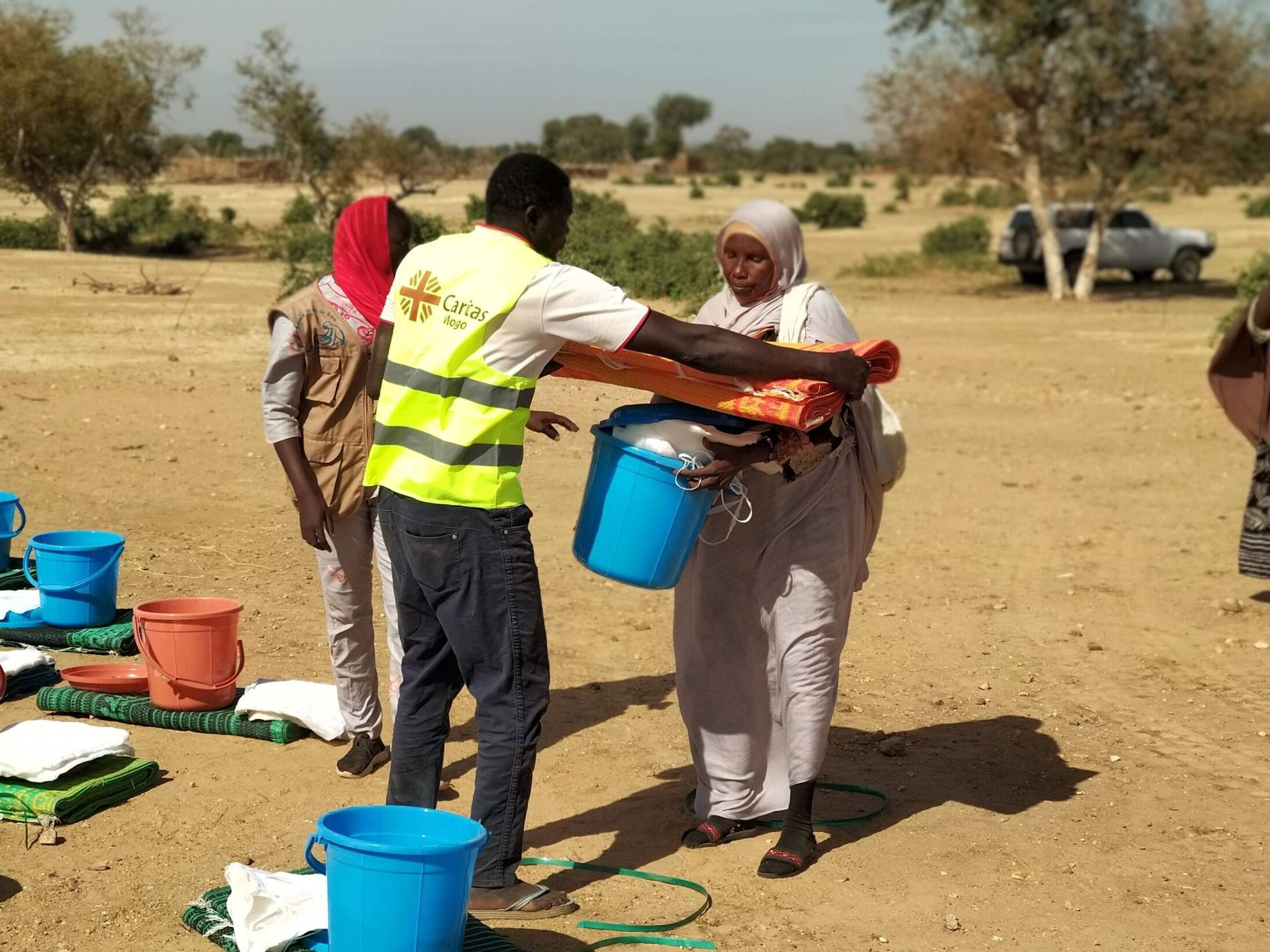
Featured photo provided by Caritas Chad.


