
Author
The Democratic Republic of the Congo (DRC) is facing a protracted humanitarian crisis driven by decades of conflict, compounded by insecurity, displacement, food insecurity, disease and climate shocks.
Renewed violence in the form of offensives by the March 23 Movement in the eastern provinces of North Kivu and South Kivu in early 2025 has pushed internal displacement to record highs.
While violence and instability in the east have long dominated international attention, there is another crisis unfolding closer to the capital of the country that remains largely invisible.
Less than a day’s drive from Kinshasa, thousands of people are fleeing violence in the western provinces.
Since June 2022, the Mobondo crisis, fuelled by land disputes, identity tensions and militarisation by both State and non-state entities has forced families from their homes, destroyed entire villages and left communities without access to basic humanitarian support. The human impact is devastating; yet, the crisis remains under-reported and humanitarian access very limited.
Families in the affected areas face repeated displacement, food insecurity, disrupted education and trauma, often with little or no access to psychosocial support. Entire communities are living in uncertainty, fearing that violence could return at any moment.
In Kenge, Kwango Province, Maman Marie opened her home to hundreds of displaced families.
“When they arrived, I couldn’t turn them away. They had nowhere else to go,” she says. Today, she struggles to feed her own children, having shared what little she had.
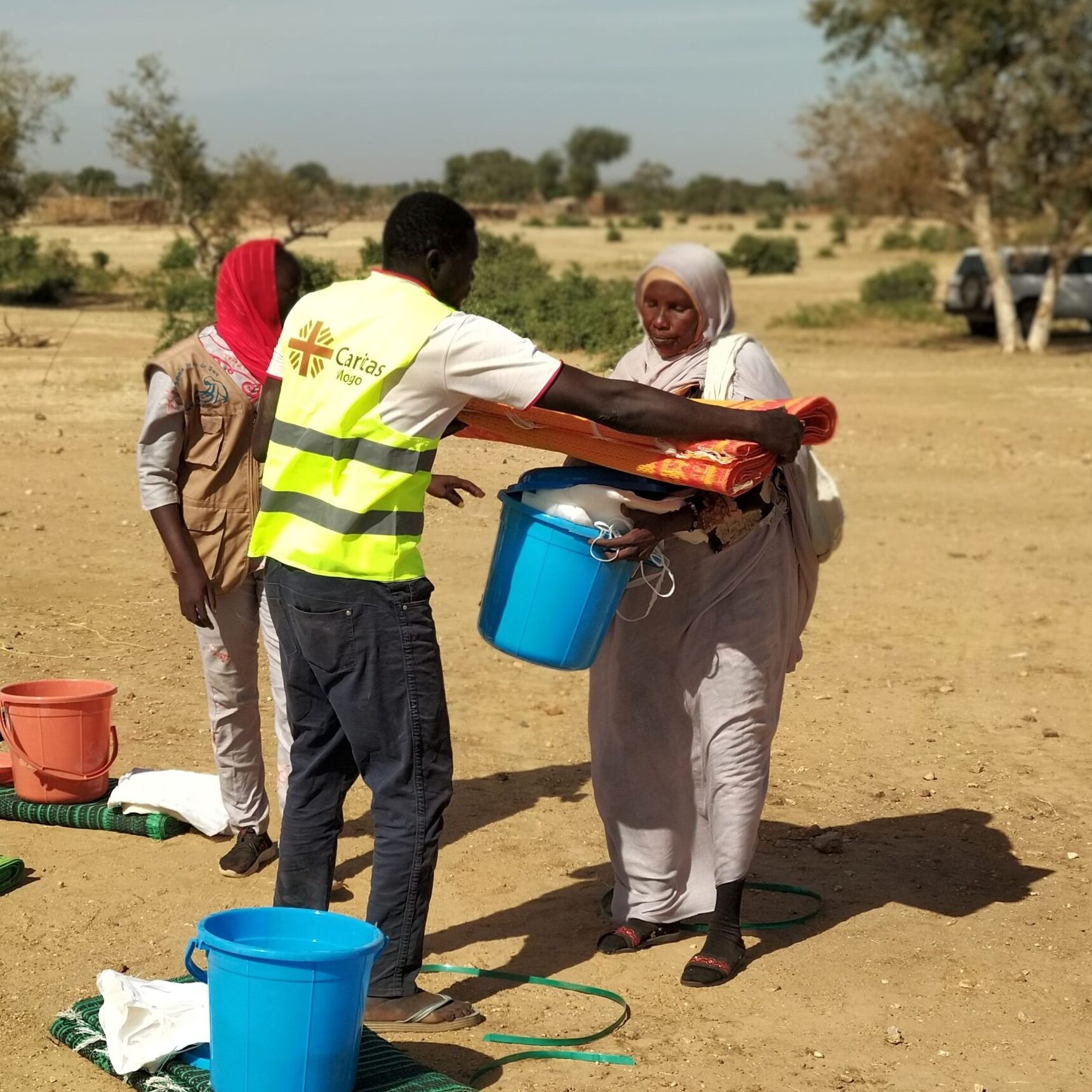
Caritas Belgium, together with local partners, has long been present in the affected areas of the country, including the western region. Since 2023, they have been providing there food, healthcare, education and psychosocial support to both displaced families and host communities with financial support from the European Commission’s humanitarian department. More recently, additional EU funding has enabled Caritas Belgium to support longer-term initiatives on social cohesion, reconciliation and peace processes.
However, structural factors continue to keep the crisis in western DRC off the international agenda. Access for journalists and humanitarian organisations is limited, reducing the visibility of the situation on the ground. Few organisations operate in the region and the voices of rural communities, customary authorities, women and displaced people themselves are rarely included in national or international decision-making. This silence leaves the human suffering largely invisible to the world.
The EU has a crucial role to play in changing this reality. First, it must raise awareness of the crisis in both bilateral and multilateral settings and officially recognise the Mobondo crisis as a major humanitarian and governance crisis. Beyond that, local organisations delivering aid, peace initiatives and development projects need flexible, multi-year support to ensure their work is sustainable and effective. Integrated approaches that link humanitarian aid, development and peacebuilding are essential, and the voices of affected communities must be included in decisions that impact their lives.
While attention often focuses elsewhere, the people of western DRC continue to live with uncertainty, hunger and fear. Caritas is committed to standing alongside these communities and the international community must step up to ensure their struggles are no longer invisible.
Read more about the crises in the report “The weight of silence: How the Mobondo revolt is shaking western DRC”
Photo © Colin Delfosse